


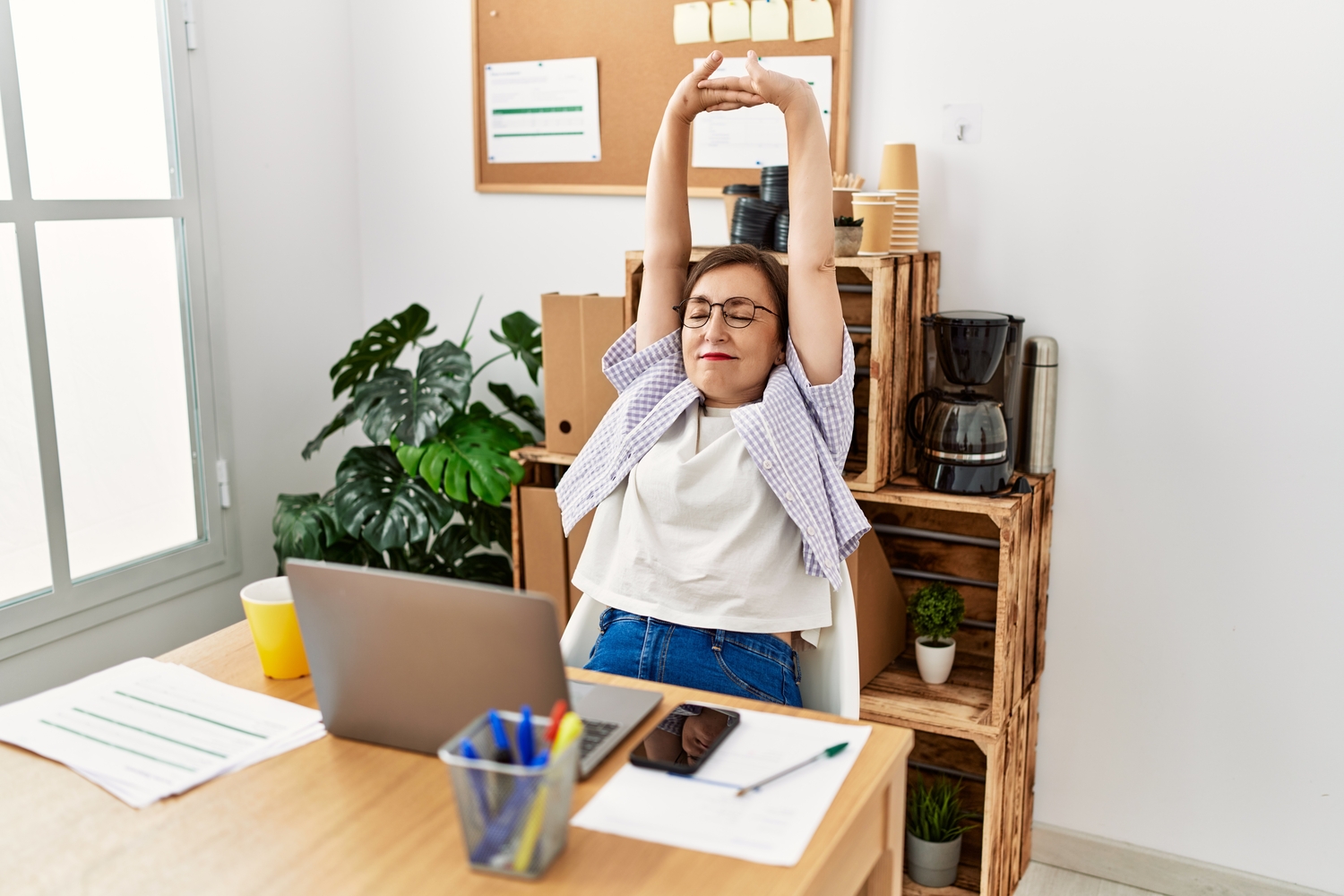
5 tips to maintain an active lifestyle when you work in an office
Are you among the droves of UK workers ditching the home for the office this year?
A report in the Guardian found that average office attendance in the UK rose as much as 44.2% between January and March 2026 – the highest level since the Covid-19 outbreak in March 2020.
While some employers have pushed strict return-to-office mandates, many enjoy the wellbeing benefits of surrounding themselves in a productive, socially connected team environment.
But long regular office stints also run the risk of a creeping sedentary lifestyle.
Keep reading to learn how prolonged inactivity at work can lead to health problems, as well as five useful tips to help you stay mobile while continuing to enjoy the benefits of the workplace.
A sedentary lifestyle can lead to long-term health complications
Unless you have a mobility impairment or disability, sitting down too much can be adverse to your health.
For example, according to the NHS, sitting for long periods of time can cause your metabolism to slow down – the process by which your body regulates blood sugar and pressure, as well as its ability to break down body fat.
There are also links between being inactive and being overweight or obese. Your risk of type 2 diabetes is elevated, and so are your chances for some types of cancer and the possibility of a premature death.
Office workers are particularly vulnerable to developing a sedentary lifestyle and its subsequent risks. If you work a typical 9 to 5, you could be spending as much as a third of your working day sitting down.
5 habits to help you stay active when you’re sat at a desk all day
It may come as no surprise that the solution to inactivity is activity. But it isn’t always easy to fit mobility exercises, runs, gym sessions, and yoga around a busy working schedule.
Here are five small changes to your lifestyle you can implement that won’t have a big impact on your working day but will have a big impact on your health.
1. Mini desk workouts
You don’t have to stand up to stay active. There are a variety of exercises you can perform while sat at your desk to encourage blood flow, stretch, and flex your muscles.
Below is an example mini desk workout from Bupa to help you get going:
- Spinal rotations
- Posterior shoulder stretches
- Shoulder shrugs
- Sitting back extensions
- Neck rotations
- Upper shoulder and neck stretches
You can use these desk workouts to break up the day, particularly when you notice you’ve been staring at your screen for too long or if you feel yourself losing focus.
2. Choose stairs over lifts
This is a simple but effective switch-up you can make in your lifestyle. According to the BBC, choosing the stairs over a lift or escalator has numerous health benefits, such as:
- Increasing your heart rate and oxygen consumption more than walking
- Improving lower body strength, which is linked to longevity and overall health
- Encouraging muscle growth, especially in the thighs.
Stairs also have the benefit of training your legs in two different ways by walking upstairs and downstairs.
For an extra challenge, you can incrementally increase the pace with which you take the stairs or take two steps at a time instead of one.
3. Switch to a standing desk
The standing desk is an ongoing trend poised as a solution to the sedentary office lifestyle.
Rather than sitting slumped over your keyboard, you burn more calories when you stand up and work – 88 calories an hour, according to one Harvard study.
Working at a standing desk can also improve your concentration, thanks to improved blood flow and oxygen delivery. It can also better your posture and reduce neck and back pain.
4. Take lunchtime or inter-meeting walks
According to the same Harvard study above, on average, walking burns 210 calories an hour. It can also greatly boost blood flow and your cardiovascular and anaerobic health.
You could fit walks in between meetings, like taking a longer route back to your desk. At lunchtime, consider walking your lunch to a bench away from the office.
5. Take advantage of your weekends
After a hectic week, you might be tempted to have an oppositely relaxed weekend. But finding the time, even for just 20 minutes a day, to do some sort of activity can greatly boost your health.
This could be anything from walking, running, cycling, swimming, climbing, or hiking.
What’s important is that you find an activity that you enjoy doing. If it becomes too much like a chore, you won’t feel motivated to stick to it.
If you haven’t had time for any movement during the week, weekend workouts can become even more valuable as a means to help you fend off sedentary health risks.
Get in touch
Make sure your financial plan also stays in shape by working with a Caliber financial adviser.
Email contact@caliberfm.co.uk or call 01525 375286 to speak to one of our team today.